For much of the past two decades, oil markets reacted sharply to the prospect of shortage. Disruption dominated the narrative, and the market often priced in fear faster than facts. Today, however, the market operates differently. Abundance has become a familiar condition, and with this familiarity has come restraint.
Consequently, recent geopolitical developments that would once have triggered sustained rallies now produce only brief price responses. This shift does not stem from complacency. Instead, it reflects a structural change in how the system assesses risk, capacity, and resilience.
Upstream: Supply Is No Longer a Surprise
At the production level, abundance is now measurable and repeatable. Record U.S. output, improved recovery rates, and shorter project cycles have reshaped expectations. Furthermore, the market no longer treats supply growth as an anomaly it must chase or fear. Rather, analysts model, monitor, and largely anticipate it.
Equally important is the credibility of spare capacity. The market now distinguishes between theoretical capacity and capacity that producers can bring online within a defined timeframe. As a result, that distinction reduces uncertainty and tempers reaction. Headlines alone no longer move prices; only verified, physical disruptions do.
Midstream: Storage Has Become Strategy
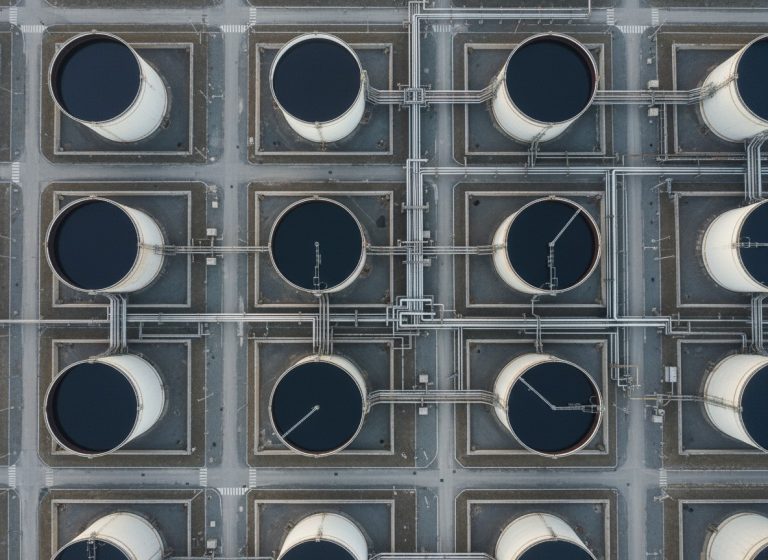
While upstream defines volume, midstream defines confidence. Global storage levels, both onshore and floating, have quietly become one of the market’s strongest stabilizers. Indeed, traders no longer see inventories merely as buffers; they view them as active instruments of risk management.
Moreover, the visibility of storage data has changed behavior. Traders and planners can see the cushion in the system, and that visibility reduces fear-driven volatility. The industry does not just produce abundance, it stores, tracks, and integrates it into expectations.
Downstream: Refining as a Balancing Mechanism
Downstream operations have also adapted. Refiners today operate with greater flexibility in crude slates and product outputs. This adaptability allows the system to absorb shifts in supply without immediate price dislocation.
Margins still fluctuate, but the system increasingly treats those fluctuations as operational signals rather than systemic alarms. Demand growth may be uneven across regions, yet refining capacity has learned to adjust rather than amplify stress.
Financial Markets: Discipline Over Drama
Perhaps the most visible change appears in the financial layer of the oil market. Price formation today reflects balance sheets, cash flow discipline, and capital allocation decisions more than speculative urgency.
Investors increasingly demand returns over expansion. That discipline reinforces abundance by slowing uncontrolled supply growth while maintaining sufficient capacity. Volatility has not disappeared, but it is more often rooted in data than in emotion.
What Abundance Really Means
Energy abundance does not imply excess without consequence. It implies a system that understands its own depth. It means volatility becomes episodic rather than structural. which means investment decisions stretch over longer horizons, guided by resilience rather than reaction.
From my experience representing a producing country at OPEC and working at the intersection of economics and energy policy, I have seen how markets evolve when confidence replaces anxiety. Today’s oil market is not indifferent to risk. It is simply better equipped to measure it.
The defining feature of this phase is not oversupply itself, but the market’s comfort with it. Abundance is no longer shocking. It is planned for, priced in, and managed. That may be the most important change of all.
For further reading check out my blog page https://imadbenrajab.com/libya-energy-insights-analysis/