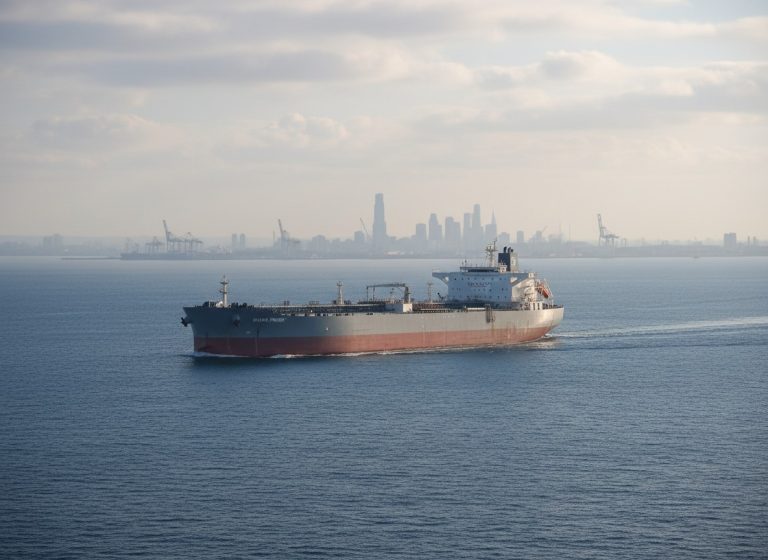
For much of modern oil market history, geopolitics carried a simple equation: political shock in a producing country meant higher prices. The reaction was often immediate and lasting, driven as much by fear as by facts.
The past few weeks tell a different story. Prices still respond to geopolitical headlines, but the response is shorter, narrower, and increasingly reversible. Markets react, reassess, and then return to fundamentals. This is not a reduction in political risk. It is a reassessment of how that risk translates into physical supply.
When Fear Meets Inventory
In late December 2025, oil prices were already under pressure. Brent closed the year near $60 per barrel after a roughly 20 percent annual decline, reflecting persistent oversupply concerns. Inventories were building, and production across multiple regions was running at or near record levels.
Against that backdrop, early January brought a familiar trigger. Political unrest in Iran pushed Brent briefly toward $65 per barrel, an eleven-week high. The move was sharp, rising more than 2.5 percent in a single session, and it followed a well-worn script: unrest, risk premium, rally.
What changed was what came next.
Within days, prices stalled. By January 14, Brent had slipped back toward $65 as fresh supply signals reasserted themselves. The resumption of Venezuelan exports, including the departure of two supertankers carrying roughly 3.6 million barrels, and large U.S. inventory builds quickly capped the rally. The market acknowledged the geopolitical risk, but it demanded confirmation of actual supply loss. When none materialized, the premium faded.
Markets Now Ask a Different Question
The key shift is not that markets ignore geopolitics. It is that they now ask a different question first.
Instead of “what could happen,” the market increasingly asks “what has actually stopped flowing.” In early January, U.S. crude inventories rose by more than 5 million barrels in a single week, while gasoline and distillate stocks posted even larger builds. At the same time, floating storage reached its highest level since 2020, a visible sign that barrels were looking for homes.
In that environment, political uncertainty alone struggled to outweigh tangible evidence of abundance.
Financial Players Have Changed Their Behavior
This more measured response is reinforced by how financial participants now position themselves. Hedge fund net-long positions across major oil contracts averaged just 326 million barrels in 2025, the lowest level since records began in 2011. By mid-December, net-long exposure fell to near-record lows, prompting short-covering rather than fresh bullish bets.
As a result, geopolitical rallies tend to be driven by risk hedging and short covering, not conviction buying. Once that positioning resets, prices lose momentum. The rally becomes an event, not a trend.
The Role of System Buffers
Structural buffers also play a central role. Spare capacity within the OPEC+ framework, combined with clear signaling around output policy, has reduced uncertainty. The decision to hold production steady in the first quarter of 2026 sent a message that producers are watching inventories closely and are willing to prioritize stability.
Storage, both onshore and floating, adds another layer of insulation. When markets can see where barrels are and how quickly they can be mobilized, geopolitical risk loses its ability to dominate price formation for long.
From Shock to Screening
What we are witnessing is not geopolitical irrelevance, but geopolitical screening. Leadership upheavals, sanctions rhetoric, and regional tensions now pass through a verification phase. Only when those developments translate into sustained, measurable supply loss do prices respond meaningfully.
From my experience working at the intersection of economics, international energy coordination, and market oversight, this evolution feels familiar. Systems mature when they accumulate experience. Repeated shocks teach markets what matters and what can be absorbed.
Oil markets have not become less political. They have become more discerning. Fear still arrives quickly, but fatigue sets in faster. And in that space between the two, fundamentals increasingly regain control.